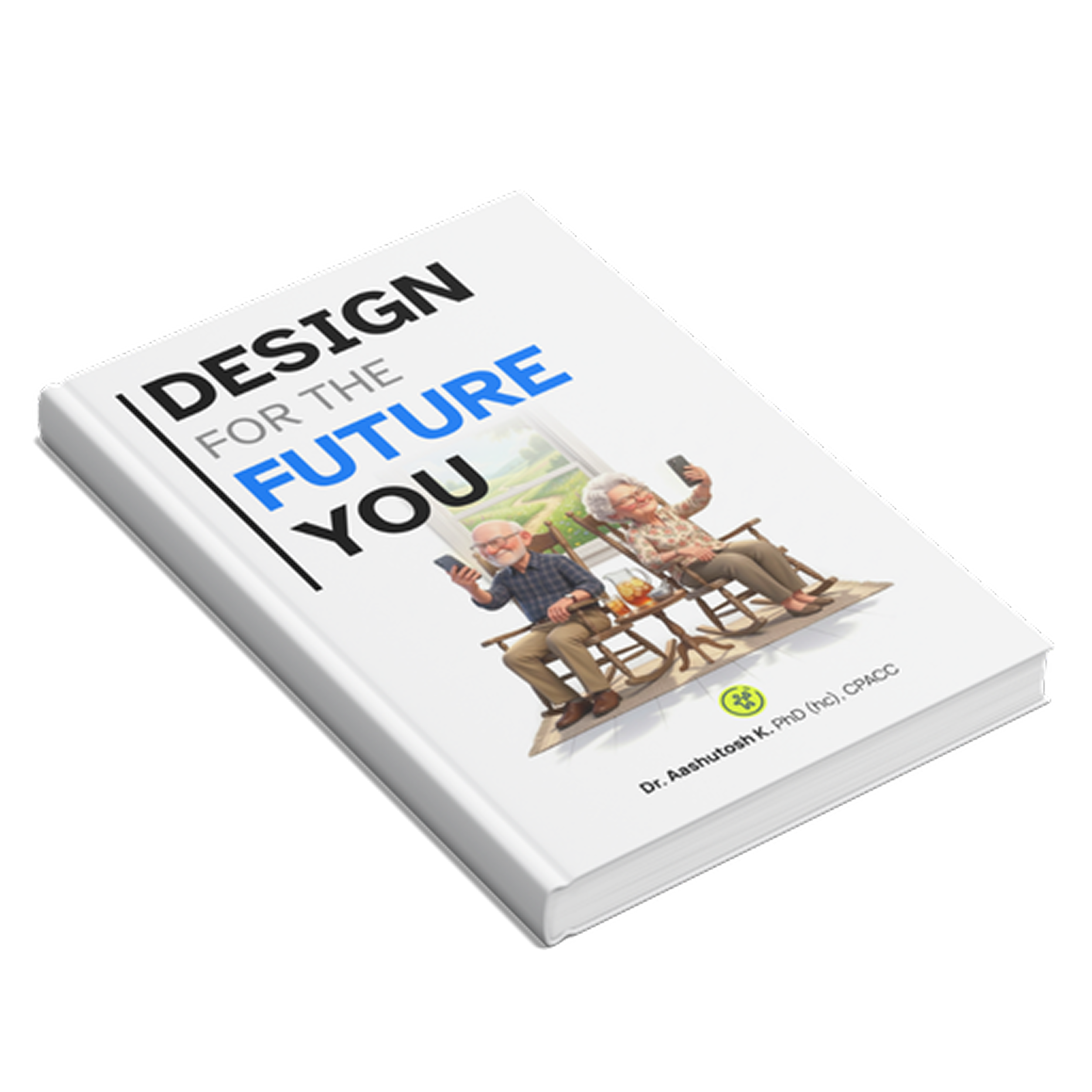
Just like the "Curb Cut Effect" — ramps built for wheelchairs end up helping parents with strollers and travelers with suitcases — WCAG isn't limited to people living with disabilities. It helps elderly users too. All of us are getting older, and the best time to start preparing our apps is now.
This free resource is a curated set of WCAG success criteria, chosen and lightly adapted for what changes as we age, and rewritten for mobile apps.
They're not broken. Design is.
The book frames aging as four gradual shifts, not a disability checklist — and shows how each one shows up on a phone screen.
Vision
The world gets hazier
Hearing
The high notes disappear first
Motor control
The small things get harder
Cognitive processing
The brain takes longer
What's inside
- Opens by busting four common myths about designing for elderly users, before getting into the guidelines themselves
- Each guideline is broken into what the guideline says, what it means in practice, and how it plays out on native mobile — no jumping between the spec and a translation
- Ends every guideline with "So... who does what" — split by Designers, Content Team and Engineering, so handover doesn't get lost
- Closes each one with "The Broader Lesson" — the underlying principle, so the guideline generalizes past the one example given
- Guidelines are grouped by priority — Must-haves, Good-to-haves and Honourable Mentions — instead of one long undifferentiated list
The Must-haves
11 guidelines that are the floor, not the ceiling — skip them and you actively lock elderly users, and by extension revenue, out.
The Good-to-haves
From autofill and persistent tooltips to consistent navigation, icons and help — the guidelines that turn "usable" into "comfortable".
Honourable Mentions
Flash limits, up-event triggering, alternatives to motion input, live captions — the edge cases worth knowing about.
Beyond the Checklist
Writing and content principles: one word for one thing, no jargon, no idioms, one idea per screen, plain-English privacy copy.
Impact Potential
- Widens the case for accessibility beyond disability compliance to an aging user base every product will eventually have
- Gives designers, content teams and engineers a shared, prescriptive breakdown instead of a spec to interpret independently
- Free and mobile-first, so it's a low-friction starting point for teams that haven't budgeted for a full audit yet